THE SHORT ANSWER
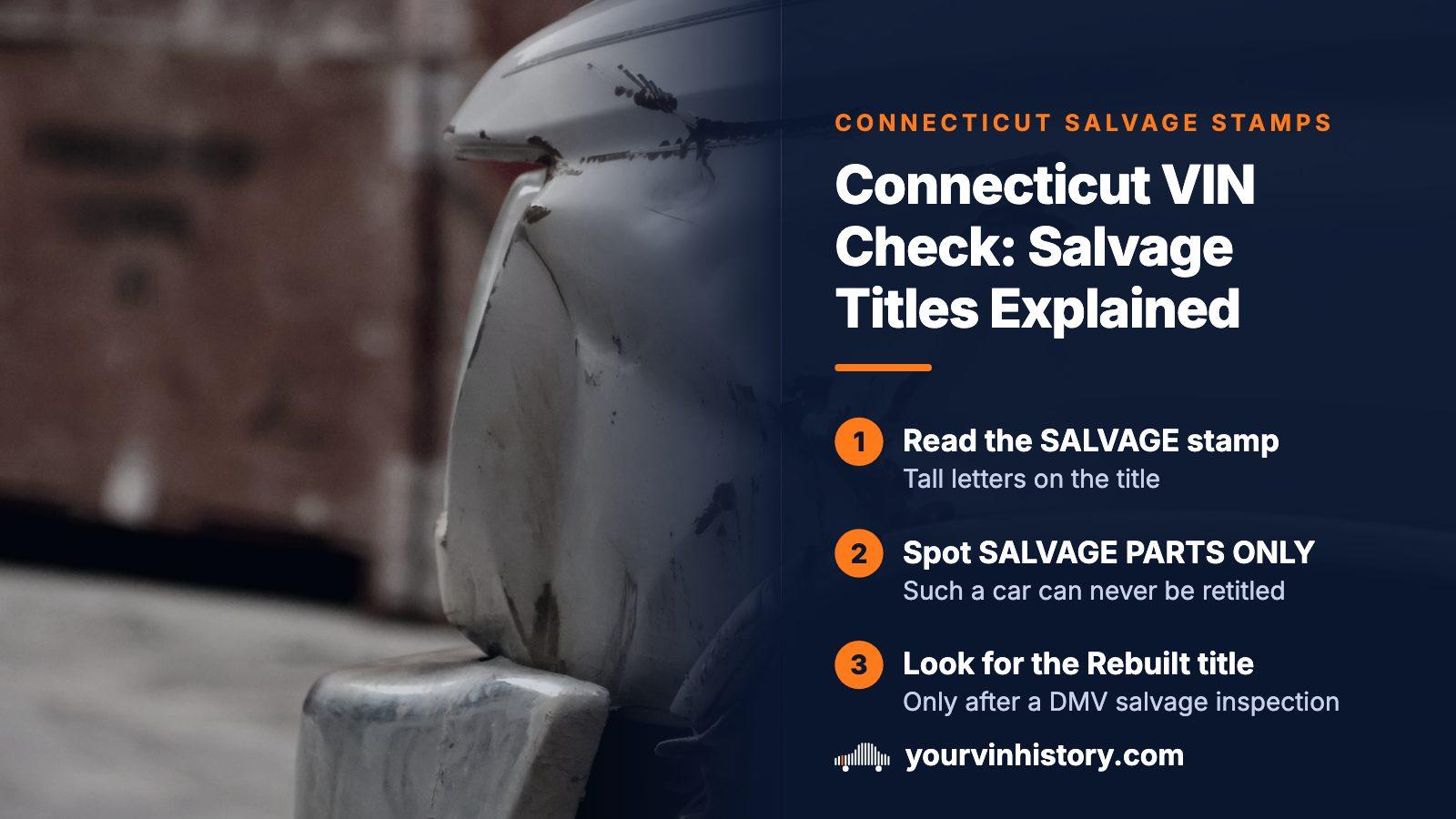
When an insurer totals a Connecticut-titled car, the title gets a SALVAGE stamp in letters an inch tall, with the appraiser's damage report attached. If ten or more major parts are ruined, the stamp reads SALVAGE PARTS ONLY and the car can never be titled or registered again. A plain SALVAGE car can return after a DMV salvage inspection, carrying a Rebuilt title. Verify with the paper and a national VIN record.
- Stamp size
- One inch tall, up to three inches long
- Parts-only trigger
- Ten or more major parts beyond repair
- Terminal wording
- Parts only, unrebuildable and unrepairable titles cannot be registered or retitled
- After a rebuild
- Salvage inspection, then a new title printed Rebuilt
What a total loss does to a Connecticut car's paperwork
The sequence starts with the insurer, not the owner. Once an insurance company decides a Connecticut-titled vehicle is a total loss, the title gets stamped and the DMV treats the car as salvage from then on. The registration is cancelled, the insurer sends the DMV a copy of the stamped title, and the owner is expected to pull the plates. Driving the car anywhere in Connecticut is illegal while it holds that status.
The plates are not lost with the car. The DMV says plates and registration can move to another vehicle, so a stamped car with bare bumpers is ordinary rather than suspicious. What matters to a buyer is the decision behind the stamp: someone with an adjuster's report in hand already concluded that this car was not worth fixing at the insurer's cost.
Reading the stamp on the title
Connecticut asks for a physical mark. The word SALVAGE is printed across the title, each letter an inch tall, and the whole word may run to three inches at most. A size rule like that keeps the brand from hiding in a corner of the form, and it makes the check simple when the document is in your hands.
The catch is the medium. A stamp does nothing for you while you scroll through listing photos, and a picture of a title can be cropped or can show an old copy. Treat the paper as something to inspect in person before any deposit changes hands.
Read past the first word
Several designations begin with SALVAGE. The words after it decide whether the car has any road life left, so read the full line and photograph it.
The ten-part line between a project and a parts donor
A plain SALVAGE stamp can be a stepping stone. Connecticut's salvage statute, as summarized by the General Assembly's research office, sends a car down a different path when the insurer finds ten or more major component parts that need replacing because they are beyond repair. An engine or transmission is the textbook example. At that count the insurer uses the stamp SALVAGE PARTS ONLY in its place.
The DMV is blunt about what follows. Three wordings close the door: parts only, unrebuildable and unrepairable. A title branded with any of them can never be registered or put into a new title, whatever the circumstances. Repair spending does not change that.
| Stamp wording | What it signals | Road future |
|---|---|---|
| SALVAGE | Insurer declared a total loss | May be rebuilt, inspected, retitled and registered |
| SALVAGE PARTS ONLY | Ten or more major parts beyond repair | None, the car is a source of parts |
| SALVAGE UNREBUILDABLE | Terminal designation | None |
| SALVAGE UNREPAIRABLE | Terminal designation | None |
The appraiser's report that should ride with the title
Connecticut also requires the insurer to attach the appraiser's damage report to the title. Buyers rarely think to ask for it. Most branding systems hand you a conclusion and keep the reasoning private, whereas here the assessment is meant to travel with the paper, so you can see which areas the adjuster counted.
A second fact backs up the expectation. When a salvage car goes to the DMV for its rebuilt inspection, the owner has to bring a copy of the original insurance appraisal behind the stamp. If a seller says the car was rebuilt, that appraisal should be somewhere in the file. A stamped title with nothing attached deserves a direct question before you discuss price.
How a plain salvage car gets back on the road
A rebuilt Connecticut car must pass a salvage inspection before it can be retitled. A private owner cannot drive it to the DMV, and it may only arrive on a flatbed with no wheel touching the ground. A licensed dealer or repairer can perform the inspection instead, and the owner then presents that paperwork at registration.
The DMV wants a paper trail built during the repair:
- Receipts for major component parts used in the rebuild, such as engines, transmissions, frames, doors and fenders, with the donor vehicle's VIN on receipts for used parts
- A copy of the original insurance appraisal that led to the stamp
- The DMV's salvaged vehicle repair report
- Photos of all four corners, the damage before repair, and welds or attachments before sealing, painting or rust proofing
- An air bag certification statement, when the car has air bags
Where a repair looks questionable, the inspector can ask for undercoating, sealer or parts to be removed so the work underneath is visible.
What the title says once the car passes
A pass produces a new title without the salvage stamp, with the word Rebuilt printed on it. The old plates can go back on the car, or new ones can be issued. The brand has changed form but not vanished: Rebuilt follows the vehicle and tells every later buyer about the total loss.
Expect the history to show up in the price, and possibly in what insurers and lenders will do with the car. The paper trail also has limits. It records that parts were bought, repairs were photographed and an inspection was passed. It cannot say whether the welds hold or the structure is straight, so a rebuilt car still needs a mechanic with a lift.
When the seller hands you a salvage title
A stamped Connecticut title cannot change hands the usual way. The DMV says the owner may not use the standard transfer form. Instead the owner first obtains a duplicate title that carries the Salvage legend, then signs the reverse over to the buyer. If a seller offers some other document for a car described as salvage, stop and ask why.
Out-of-state paper adds a trap. Connecticut does not accept New York salvage certificates, because they are not title documents. A New York car must pass a New York inspection, which results in a New York title, before it can be dealt with as a titled vehicle. A seller waving a certificate has not given you something you can register here.
Where a Connecticut stamp stops being useful
The stamp covers only what Connecticut did. A car titled in another state first carries whatever that state recorded, and a Connecticut document may not repeat it. NMVTIS, the federal title information system, exists to expose title fraud and keep stolen vehicles from being resold, and it gives you a view across state lines that no single state's paper can.
A yourvinhistory report draws its title records from ClearVin LLC, an approved NMVTIS data provider, and adds accident records with a damage map, salvage and auction entries with photos, and odometer readings. The VIN preview comes first; the report is a one-time purchase.
A sequence for checking a Connecticut car before you pay
- Decode the VIN and confirm the model year, engine and trim match the listing.
- Run the NHTSA recall lookup, a no-cost tool. A salvage brand says nothing about open recalls, and whether a maker must repair an old vehicle at no charge depends on the vehicle's age.
- Ask to hold the paper title and look for the appraiser's report attached to it.
- Read the whole stamp line, then photograph it.
- Pull a national title record to catch brands from other states.
- If any rebuild appears in the history, book a mechanic and ask for the repair photos.
Do the cheap steps first. The decode, the recall lookup and a photo of the title cost a few minutes each, and any one of them can end the conversation before you spend a Saturday driving out to see the car.
Where this information comes from
- Connecticut DMV: salvaged and totaled vehicles — Supports the cancelled registration, the terminal designations, the transfer steps, the inspection paperwork and the Rebuilt title.
- Connecticut General Assembly: sale of salvage vehicles — Research office summary behind the stamp dimensions, the attached appraisal and the ten-part test.
- NHTSA: recalls lookup — The federal search for open recalls by VIN, separate from any state title brand.
- NMVTIS: vehicle history information — The Justice Department program that links state title data, for checking brands from outside Connecticut.
Sources and photos: Facts checked against the sources above in October 2026. Photo by Everett Pachmann on Unsplash; diagrams by YourVINHistory.
Keep reading
- What is a branded title?Every kind of brand compared, so you can place a Connecticut stamp among them.
- Rebuilt title inspectionWhat a rebuilt-vehicle inspection actually checks, and what it leaves alone.
- Salvage title VIN checkA three-step order of checks for catching a title washed across state lines.
- New YorkThe neighboring state whose salvage certificates Connecticut will not accept.
Frequently asked questions
How do I know if a Connecticut car has a salvage title?
Look for the word SALVAGE stamped on the paper title, in large letters. The DMV also treats a car as salvage whenever the insurer has declared it a total loss. A polished listing proves nothing, so ask for photos of the front and back of the title before you drive anywhere, then confirm against a national record.
Can a Connecticut salvage parts only car ever be registered?
No. The DMV states that titles branded parts only, unrebuildable or unrepairable are closed to registration and to retitling, whatever the circumstances. Anyone promising to sort out the paperwork later is mistaken or hoping you are. Such a car makes sense only as a source of parts, and the price should reflect that single use.
Is it legal to drive a salvage car in Connecticut?
Not while it holds salvage status. The registration is cancelled, and the DMV calls operating the vehicle anywhere in the state illegal. Even the trip to the salvage inspection must be made on a flatbed with no wheel touching the ground. Driving becomes lawful only after a pass and a new Rebuilt title.
Does a Rebuilt title mean the car was repaired well?
It means the car cleared the salvage inspection and the owner produced the required records. It does not grade the workmanship. Because rebuilders must photograph the damage and the repair stages, ask the seller for that same photo set, then have an independent mechanic check frame alignment and the weld seams.
Where do Connecticut salvage inspections take place?
The DMV runs salvage inspections at its Wethersfield location on weekdays, and the fee can be paid ahead of time. Licensed dealers and repairers may inspect too, if they choose, so call before you go. Check the DMV page for current hours, since arrival cutoffs apply.
Now check the car itself
The guide explains what to look for. The report shows what this VIN has on record.