THE SHORT ANSWER
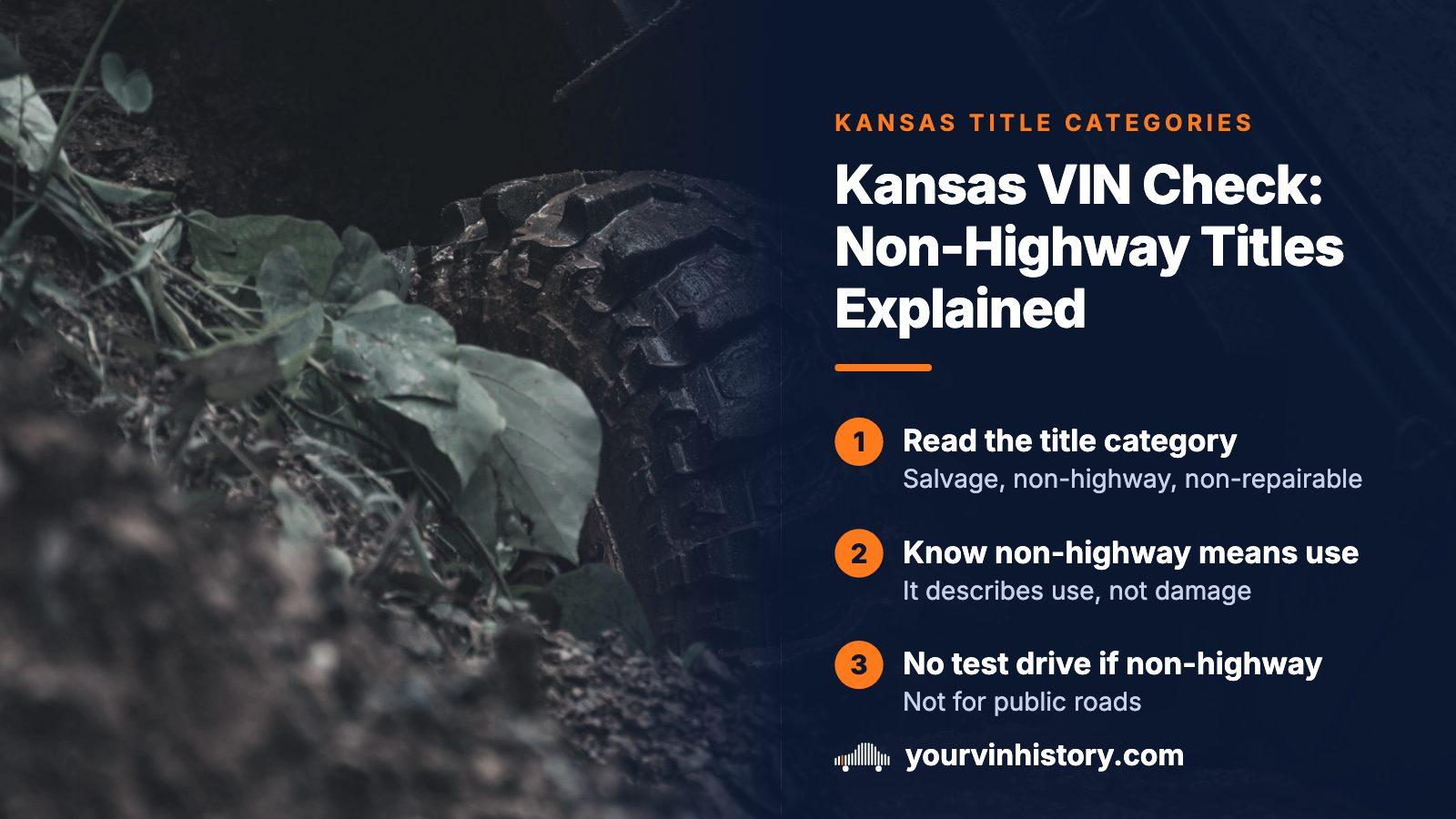
Decode the VIN, run the NHTSA recall search and the NICB VINCheck, then pull an NMVTIS title record from an approved provider. In Kansas, also read the title category word for word. Non-highway describes use, not damage, and a vehicle that returns to the road receives a Formerly Non-Highway title that keeps the history visible. A vehicle still titled non-highway should not be test driven on public roads.
- Kansas title categories
- Salvage, non-highway and non-repairable
- Paperwork behind the brand
- A form TR-13 affidavit, attached to the title
- Inspection to return to the road
- MVE-1 at a Kansas Highway Patrol station
- Title after the inspection
- Rebuilt Salvage or Formerly Non-Highway
A Kansas brand that describes use, not damage
Ask most buyers to list the title brands and you get salvage, rebuilt and maybe junk. Kansas keeps one more on the books: the non-highway title, for a vehicle kept off the public roads and highways of Kansas. The definition says nothing about a collision.
So the label is about use rather than damage. Salvage points at what happened to the metal. Non-highway points at where the vehicle was allowed to go. A project car in a garage, a field truck on a farm, or a machine parked for years can carry the brand with no crash behind it. Treat the two labels as the same thing and you may pass on a sound vehicle, or relax around a wrecked one.
The five labels you may meet on a Kansas certificate
Five phrases can appear on a Kansas title, and each one makes a different statement about the vehicle.
| Label on the title | What it tells you |
|---|---|
| Salvage | The vehicle sits in the salvage category, which is tied to damage or a write-off. |
| Non-highway | The vehicle is not being driven on public roads. Damage is not part of the definition. |
| Non-repairable | The final designation. The vehicle is not a candidate for road use again. |
| Rebuilt Salvage | A vehicle that carried the salvage brand earlier, then passed inspection and went back on the road. |
| Formerly Non-Highway | A vehicle that carried the non-highway brand earlier, then passed inspection and went back on the road. |
Look at how they pair up. Rebuilt Salvage is the exit from salvage, and Formerly Non-Highway is the exit from non-highway. Non-repairable has no partner label, because it is where a vehicle's road life ends.
Form TR-13, one affidavit for three conditions
Kansas runs all three categories through form TR-13, an affidavit titled for salvage, non-highway or non-repairable status. The owner attaches it to the certificate of title before applying. The Department of Revenue posts it alongside its other vehicle forms, so any buyer can read exactly what an owner signs.
One form covering three different conditions is tidy for the county office and confusing for everyone else. A seller who says there was an affidavit has not told you which condition applies. The category printed on the title settles that, so read it before you read anything else. If the seller can only describe the paperwork from memory, ask to see the certificate itself.
What the owner promised, and why it settles the test-drive question
By signing the affidavit, the owner certifies that the vehicle will stay off Kansas streets and highways until three things are in place: liability insurance, an application for a title that marks the vehicle roadworthy, and an issued license plate.
That gives a buyer a simple test. Suppose a seller describes a vehicle as non-highway and then offers a drive around the block. One of those statements has to be wrong: either the title is not what you were told, or the drive would not be lawful. Both outcomes are better learned before any money moves.
Decline the road test on a non-highway title
If the title still reads non-highway, ask to see it and decline the drive. If the seller insists the vehicle is back in service, the title should now read Formerly Non-Highway and a plate should be on it.
How a laid-up vehicle gets back on public roads
The way back follows a fixed order, and each step leaves a document behind.
- Meet the entry condition. A salvage vehicle is repaired first. A non-highway vehicle needs liability insurance in place.
- Take the vehicle to an inspection station run by the Kansas Highway Patrol for the examination.
- Collect the MVE-1 from the inspection. The pink copy is the one the next step needs.
- Go to the county treasurer's motor vehicle office with the existing title, the pink copy and proof of insurance, and apply for whichever title fits: Rebuilt Salvage or Formerly Non-Highway.
None of this makes the inspection a warranty. The MVE-1 is a state examination on a given day. It is not a service history, and it says nothing about how the vehicle was stored or maintained before or after.
Formerly Non-Highway is information, not a clean slate
At the end of that route the owner does not receive a title that looks like any other. The result reads Formerly Non-Highway, and the wording is deliberate: the period off the road stays attached to the vehicle. Nothing in the process described here lets an owner put a vehicle back on the road and drop the record of its absence.
For a buyer, the certificate therefore carries a clue that ownership paperwork usually does not. Something took the vehicle out of service for a while, and the useful question is what that was, not whether it happened.
Treat the wording as a prompt
Formerly Non-Highway does not condemn a vehicle. A careful restoration and a neglected one can wear identical words on paper, and only the seller's answers, the maintenance records and a mechanic's inspection can tell them apart.
What years of sitting do that a crash does not
A vehicle that spent its time off the road has a different damage profile from a repaired wreck, and a buyer who is hunting for body repair can miss it. Ask a mechanic to look for age and storage problems instead.
- Rubber seals, gaskets and hoses that dried out or cracked while idle.
- Old fluids in the engine, transmission, cooling and brake systems.
- Tires that aged out by time rather than mileage, sometimes with flat spots.
- Brake parts that corroded or seized while the vehicle sat.
- Wiring and upholstery chewed by rodents.
Ask the seller what was replaced after the vehicle came back into service, and ask for paper that shows it. A recovery story with no receipts is worth pricing accordingly.
Why the Kansas certificate answers only half the question
Kansas is precise about its own vocabulary. A vehicle branded elsewhere before it reached Kansas carries that brand in the federal title system, worded the way the original state words it, so the Kansas paperwork alone cannot show it.
NMVTIS is that federal system, and approved providers sell its title record to the public. A yourvinhistory.com preview shows whether records exist for a VIN, and the paid report adds NMVTIS title records supplied by ClearVin LLC, an approved NMVTIS data provider, alongside accident, odometer and auction records.
Two lookups from others cost nothing: NHTSA's recall search by VIN and NICB's VINCheck for theft and salvage records. Neither depends on how Kansas categorized the title, so run them even when the certificate looks clean.
A Kansas check in the order that saves the most time
Sequence matters because each step can end the search early.
- Decode the VIN to confirm the build and model year before reading any paper.
- Read the category on the title exactly as printed, because each of the five labels makes a separate claim.
- Buy an NMVTIS title report through an approved data provider to catch brands applied in other states.
- Run the NHTSA recall search and the NICB VINCheck.
- Inspect anything that has been idle, using the list above, before you agree on a price.
Steps one, three and four cost little and work for a vehicle from any state. Steps two and five are the Kansas-specific work, and they are the ones a seller is least likely to volunteer.
Where this information comes from
- Kansas Department of Revenue: Form TR-13 — The affidavit behind the salvage, non-highway and non-repairable categories, and what the owner certifies by signing it.
- Kansas Department of Revenue: Titling a vehicle FAQ — Backs the MVE-1 examination and the county treasurer application that lead to a Rebuilt Salvage or Formerly Non-Highway title.
- Kansas Department of Revenue: Vehicle forms and publications — Where the state lists its title and registration forms.
- NHTSA: Recalls — Recall search by VIN, which works the same whatever category the title carries.
Sources and photos: Facts checked against the sources above in October 2026. Photo by Johann Noby on Unsplash; diagrams by YourVINHistory.
Keep reading
- Kansas platesThe MVE-1 inspection from the other direction, for a car arriving from another state.
- What is a branded title?Every brand type in one place, for comparison with the Kansas categories.
- NMVTIS reportHow the federal title record shows brands applied in other states.
- Rebuilt title inspectionWhat an inspection after a rebuild does and does not judge.
Frequently asked questions
Does a Kansas non-highway title mean the vehicle was wrecked?
No. The category describes how the vehicle is used, not what happened to it. A project car, a farm vehicle or something stored for years can be titled non-highway without any collision. Salvage is the category tied to damage and write-offs. Because the two can look alike to a casual reader, check the exact wording on the certificate, then see whether a national record shows a damage-related brand.
What should I ask the seller of a Formerly Non-Highway vehicle?
Ask where the vehicle spent its time off the road, how it was stored, and what work was done before it went back into service. Request receipts for that work. Then have an independent mechanic check the seals, fluids, tires and brakes. The title tells you the period existed; only the seller and the vehicle can tell you what it did to the car.
Where do I find Kansas form TR-13?
The Kansas Department of Revenue publishes TR-13 among its vehicle forms and publications. Owners attach the completed affidavit to the certificate of title before applying for a salvage, non-highway or non-repairable designation. A buyer does not file it, but reading the form shows exactly what the seller certified about driving the vehicle on public roads.
Can I find a Kansas owner's name from a license plate?
Not out of curiosity. The federal Driver's Privacy Protection Act limits access to owner details in state motor vehicle files to a defined list of permitted uses. For a vehicle you are considering, the VIN is the better key: it opens the title, recall and theft records without involving the owner's identity at all.
Does a Kansas VIN check replace reading the title?
No, the two answer different questions. The Kansas certificate shows the state's own categories, such as Formerly Non-Highway. National records show brands applied elsewhere in the other state's wording, plus recalls and theft screens. Use the certificate to learn how Kansas classified the vehicle, and the VIN-based lookups to learn what happened before it arrived.
Now check the car itself
The guide explains what to look for. The report shows what this VIN has on record.